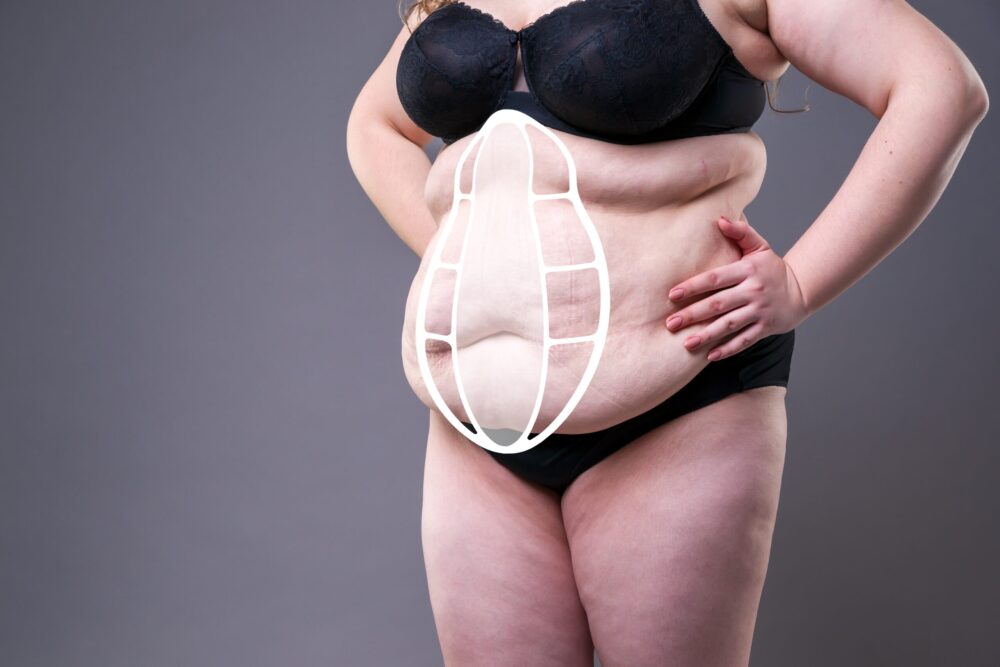
Diastasis recti is one of the most common postpartum conditions in the United States, yet a significant number of women who have it go years without a diagnosis, quietly accepting physical changes from pregnancy as simply part of the package. The condition involves a separation of the abdominal muscles along the midline of the body, creating a gap that can contribute to the characteristic lower belly protrusion many postpartum women notice and struggle to address through diet and exercise alone.
Understanding what diastasis recti actually is, how it is identified, and what treatment looks like changes the conversation from one of personal inadequacy to one of informed health management.
What diastasis recti is and why it happens
The abdominal muscles run vertically along either side of the midline of the body and are connected by a band of connective tissue. During pregnancy, the expanding uterus places significant pressure on this tissue, causing it to stretch and the muscles to separate. While some degree of separation is normal and expected during pregnancy, the gap does not always close adequately on its own after delivery.
Diastasis recti is more common in pregnancies involving multiples, older maternal age, and repeated pregnancies, though it can affect any postpartum individual. It is not exclusively a condition affecting women either. Men who carry significant abdominal weight or engage in heavy lifting without proper core engagement can also develop it.
The condition is not purely a cosmetic issue. Because the deep core system includes the diaphragm, the abdominal muscles, and the pelvic floor working together as an integrated unit, a disruption in one area affects the entire system. People with diastasis recti often experience secondary symptoms including low back pain, poor posture, pelvic floor dysfunction, and difficulty with everyday movements like lifting, bending, and walking for extended periods.
Why some common exercises make it worse
One of the most important and least understood aspects of diastasis recti is that certain exercises commonly associated with core strengthening can actually worsen the condition when performed without proper guidance. Traditional movements like crunches, sit-ups, and standard planks can increase intra-abdominal pressure and cause the connective tissue along the midline to bulge outward rather than draw inward, making the separation more pronounced rather than less.
This does not mean exercise should be avoided. It means that how an exercise is performed matters as much as which exercise is chosen. Movements that encourage the deep stabilizing muscles to engage correctly, rather than compensating by bearing down or straining the neck and shoulders, are the foundation of effective diastasis recti rehabilitation.
A pelvic floor physical therapist is the most appropriate starting point for anyone who suspects they have this condition. A proper assessment examines both the width and the depth of the separation as well as the functional capacity of the surrounding core tissue. The gap itself is only part of the picture. The tension and responsiveness of the connective tissue determines how well the core can manage pressure and protect the spine during movement.
What a treatment plan looks like
Diastasis recti treatment begins with restoring the body’s ability to manage intra-abdominal pressure correctly before progressing to more demanding core work. Breathing mechanics are typically addressed first, since the diaphragm plays a central role in how pressure moves through the core with every breath.
Early stage exercises focus on coordination and body awareness rather than strength. Gentle movements that restore communication between the core and hips help the body relearn patterns that pregnancy and recovery may have disrupted. As control improves, more targeted work can be introduced gradually, including modified side planks, lower abdominal bracing, and balance-based exercises that challenge the deep stabilizing system without overloading the connective tissue.
Common warning signs that an exercise is too advanced too soon include visible doming or bulging along the midline of the abdomen during the movement. When that happens, the exercise should be modified or replaced until sufficient control has been developed.
Surgery becomes a consideration when conservative treatment does not adequately resolve functional issues or when structural damage is significant enough to affect quality of life. Exercise is a genuinely powerful tool for managing diastasis recti, but it cannot always fully close a large separation or repair connective tissue that has been significantly altered by pregnancy. A physician specializing in urogynecology or a pelvic reconstructive specialist can help assess whether surgical intervention is appropriate.
What matters most is knowing that physical changes after pregnancy are not inevitable life sentences. With the right diagnosis and the right support, meaningful improvement is possible even years after giving birth.