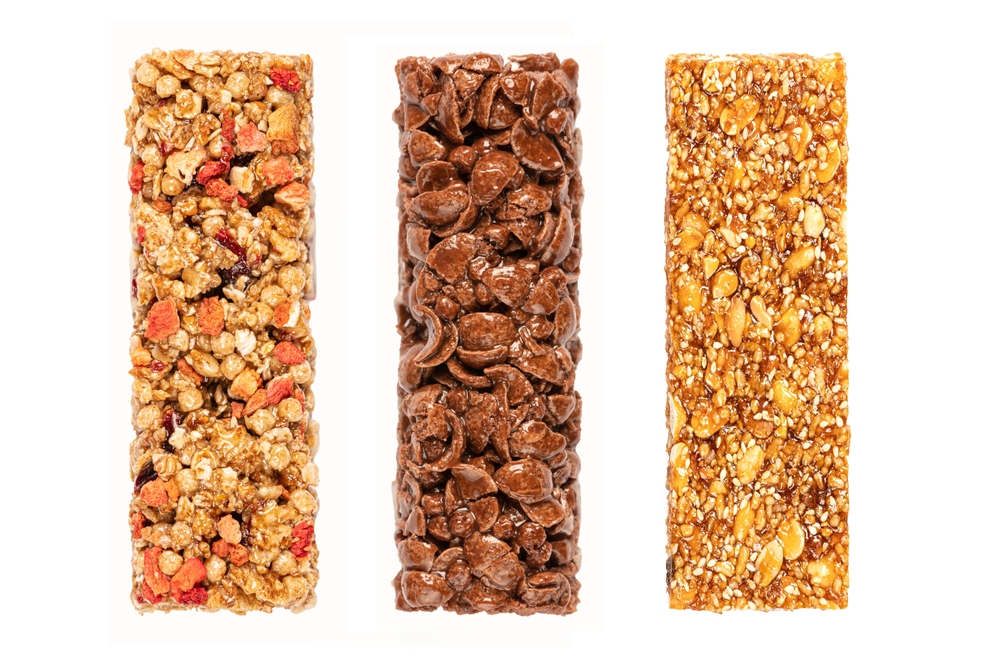
That wholesome snack in your bag may have more in common with candy than you think.
They sit neatly packaged in the health food aisle, wrapped in earthy tones and decorated with words like natural, whole grain, and protein-packed. Granola bars have spent decades building a reputation as the responsible snack — the smart choice tucked into gym bags, school lunches, and desk drawers across the country. But that reputation, it turns out, may be one of the most successful marketing illusions in modern food history.
The uncomfortable truth is that most granola bars are not the health food they pretend to be. And the people most likely to be misled are the ones trying hardest to make good choices.
What Granola Bars Are Actually Made Of
Flip over a standard granola bar and take a hard look at the ingredient list. What you will often find reads less like a wholesome snack and more like a dessert in disguise. Many popular granola bars contain as much sugar as a candy bar — sometimes more. High-fructose corn syrup, glucose syrup, and various forms of added sugar frequently appear within the first five ingredients, the section of any label that reveals what a product is mostly made of.
Beyond sugar, many granola bars are loaded with refined oils, artificial flavors, and preservatives that have no business being in something marketed as natural. The fiber content, often used as a selling point, is sometimes so minimal that it offers little to no meaningful digestive benefit. And the protein numbers that dominate front-of-package marketing? Often derived from sources that come bundled with significant amounts of sugar and saturated fat.
For anyone managing blood sugar, watching their weight, or simply trying to eat clean, these bars can quietly work against every goal they are meant to support.
The Granola Bar and Blood Sugar Connection
One of the most urgent concerns surrounding granola bars is their impact on blood sugar levels. Many bars are built on a foundation of quick-digesting carbohydrates — oats, puffed rice, honey, and syrups — that cause blood sugar to spike rapidly and crash just as fast. That cycle of spike and crash is not just uncomfortable. Over time, it contributes to increased cravings, energy dips, and for those with insulin sensitivity or diabetes, genuinely dangerous fluctuations.
This is particularly significant in communities where diabetes and metabolic conditions already carry a heavy burden. Reaching for a granola bar as a healthy alternative to a cookie or a pastry may feel like progress — but when the sugar content is nearly identical, the trade-off is mostly cosmetic.
The glycemic impact of many mainstream granola bars rivals that of processed snack foods the health-conscious crowd actively avoids. That gap between perception and reality is where the real damage gets done.
Not All Granola Bars Are the Enemy
To be fair, not every granola bar deserves to be thrown out. A small but meaningful segment of the market has moved toward formulations that prioritize real ingredients, lower sugar content, and actual nutritional density. The difference between a well-made granola bar and a candy bar dressed in oat clothing comes down to a few key markers.
When evaluating any granola bar, look for
- Less than 6 grams of added sugar per serving
- At least 3 grams of fiber
- At least 5 grams of protein
- Whole food ingredients listed first — nuts, seeds, oats
- No high-fructose corn syrup or glucose syrup
Bars built around nuts, seeds, and minimal sweeteners — with ingredient lists short enough to read in under ten seconds — are the ones actually earning their place in the health food aisle. They exist, but they require intention to find.
Reading Labels Before It’s Too Late
The granola bar industry is a multi-billion dollar business built in large part on the assumption that consumers will not read the label carefully. That assumption has proven remarkably accurate. Most people grab a bar based on the front of the package — the part the manufacturer controls entirely — and never turn it over.
That habit is worth breaking. Front-of-package claims are largely unregulated and exist to sell product, not inform buyers. The back of the package, specifically the nutrition facts panel and the ingredient list, is where the real story lives.
Making the switch from blind brand trust to active label reading is one of the simplest and most powerful shifts anyone can make in their approach to nutrition. Granola bars are not inherently bad — but the ones lining most store shelves are counting on you not to look too closely.
Look closely.