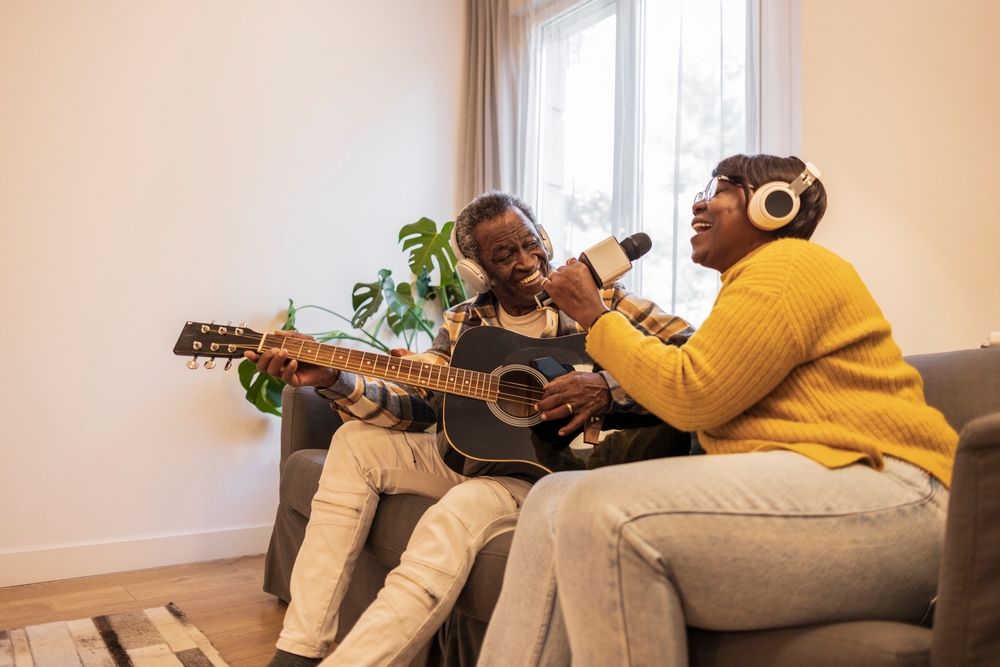
The ancient ritual of song and rhythm may be the most powerful — and most overlooked — longevity tool available
There is something quietly powerful happening around music in living rooms, front porches and community centers across the country. Older adults are picking up guitars, singing in choirs, swaying to decades-old records — and science is now confirming what culture has always known. It is not just medicine for the soul. It is medicine for the body, the brain and the spirit.
That lifelong relationship with music — rooted in gospel, blues, soul and jazz — may be one of the most powerful and underrated tools for living a longer, sharper and more joyful life.
Why Music and the Brain Are a Perfect Match
Music engages nearly every region of the brain simultaneously — more than almost any other activity. For older adults, that full-brain stimulation translates into real, measurable benefits:
- Improved memory and recall
- Reduced risk of cognitive decline
- Stronger emotional regulation
- Lower cortisol levels, meaning less chronic stress
- Better sleep quality
For seniors who face disproportionate rates of hypertension, dementia and depression, music offers a natural, accessible and culturally resonant form of prevention that no prescription can fully replicate.
Music Lowers Blood Pressure and Fights Chronic Stress
Chronic stress is one of the most underestimated threats to longevity. Music — particularly slow, familiar and emotionally meaningful songs — has been shown to activate the parasympathetic nervous system, slowing the heart rate and easing tension in the body. Listening to beloved songs from younger years can trigger dopamine release, the brain’s feel-good chemical, creating a natural mood lift that combats anxiety and depression.
For seniors managing hypertension, even 30 minutes of calming music daily has shown measurable drops in blood pressure in multiple clinical studies. That is a remarkably simple intervention with profound long-term impact.
Singing and Playing Instruments Build Community
Loneliness is now widely recognized as a public health crisis among older adults — and its effects on the body are as damaging as smoking 15 cigarettes a day. Music has a unique power to dissolve isolation. Choir groups, jam sessions and community music programs bring people together around shared sound and shared memory.
Playing an instrument, even later in life, strengthens fine motor skills, sharpens focus and builds a sense of accomplishment. Learning new songs keeps the brain flexible and curious — two qualities strongly linked to longer, healthier lives.
How to Make Music a Daily Longevity Habit
The good news is that the barrier to entry is remarkably low. Here are simple ways to weave music into everyday life:
- Start the morning with a favorite playlist from your most joyful years
- Join a local choir, drum circle or community group
- Pick up an instrument — even a simple one like a ukulele or hand drum
- Use it intentionally during stressful moments to reset the nervous system
- Dance — even gently — to a few songs each day for both physical and emotional benefits
It does not require youth, talent or money. It only requires a willingness to let sound do what it has always done — heal, connect and carry people forward.
The Rhythm of a Long Life
The elders who sing the loudest, hum while cooking and tap their feet to an old record are onto something the rest of the world is only beginning to measure. It is not a passive pleasure. It is an active, powerful force that shapes how long and how well people live.
The science keeps catching up to what generations of music lovers have always felt in their bones — a life filled with music is a life well and fully lived, richer in every possible way.