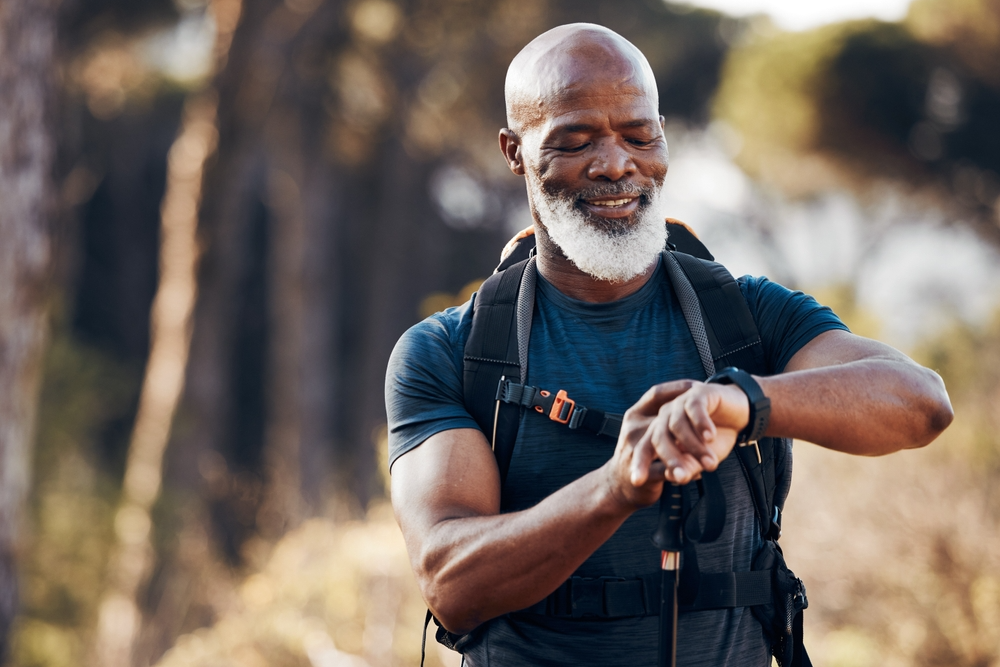
There is a version of aging that looks like slowing down, stepping back, and quietly accepting the body’s decline. And then there is the other version — the one where a man straps on a pack, hits the trail, checks his pace, and keeps going.
That second version is not just more appealing. It is scientifically proven to add years to your life.
Staying active after 50 is no longer just a wellness suggestion. It has become one of the most powerful longevity tools available — and the research behind it is impossible to ignore.
Why 50 Is the Most Important Fitness Turning Point
The body does not fall apart after 50. It shifts. Muscle mass begins declining at roughly one percent per year after middle age — a process called sarcopenia — and cardiovascular efficiency starts to dip without consistent stimulus. But here is what most people miss: those declines are not inevitable. They are largely the result of inactivity, not age itself, especially when people stop living an active lifestyle.
Men who remain active and maintain regular physical activity after 50 show measurably slower muscle loss, better heart function, and stronger bone density than sedentary peers of the same age. The body responds to demand at every decade. The only requirement is that the demand keeps coming.
Active After 50 Means More Than Just Living Longer
Longevity is not just about adding years — it is about the quality of those years. Research from the American Heart Association found that adults over 50 who engage in at least 150 minutes of moderate activity per week reduce their risk of cardiovascular disease by up to 35 percent. That same activity level is linked to lower rates of type 2 diabetes, cognitive decline, and depression.
The numbers tell a clear story
- Men who stay physically active after 50 live an average of 3 to 7 years longer than inactive peers
- Regular movement reduces the risk of early death by up to 30 percent in adults over 50
- Outdoor physical activity specifically — hiking, walking trails, nature exposure — has been linked to lower cortisol levels and reduced inflammation markers
- Strength retention after 50 is directly tied to independence and mobility well into the 70s and 80s
- Consistent aerobic activity after midlife is one of the strongest predictors of cognitive health in later years
These are not lifestyle bonuses. These are life-extending outcomes driven by one decision — to keep moving.
Outdoor Movement Hits Different After 50
There is something that happens when the workout leaves the gym and enters the outdoors. The terrain shifts. The environment changes. The mind engages in ways a treadmill simply cannot replicate, encouraging a more active connection with both body and surroundings.
Hiking in particular has emerged as one of the most complete longevity activities available to men over 50. It combines cardiovascular effort, balance training, lower body strengthening, and mental restoration — all in a single outing. The uneven ground activates stabilizer muscles that flat-surface cardio never touches. The elevation changes challenge the heart without the joint impact of running. And the natural environment delivers stress reduction benefits that compound over time, keeping both body and mind active.
A man checking his pace on a forest trail is not just exercising. He is investing — in his heart, his joints, his mind, and his future.
The Fitness Tracker Generation Is Winning at Aging
Wearable fitness technology has quietly become one of the most powerful longevity accountability tools of this era. Men over 50 who track steps, heart rate, and activity trends are significantly more likely to maintain consistent movement habits than those who do not.
The data visibility matters. Seeing a resting heart rate drop over months, watching weekly active minutes climb, noticing recovery time improve — these metrics create a feedback loop that keeps motivation alive long after the initial enthusiasm fades. Longevity is a long game, and fitness tracking turns it into one worth playing every single day.
The Shift That Changes Everything
The culture around aging is changing. The image of a man past 50 who is strong, mobile, and deeply engaged with his physical health is no longer the exception. It is becoming the standard — and the men setting that standard are doing it one trail, one session, one active day at a time.
The body at 50 is not finished. It is experienced. It knows effort. It responds to challenge. The only question is whether the challenge keeps coming.
Strap in. Keep moving. The best years are still ahead.