The simple habit of drinking smarter could completely change how you train and recover.
Every serious athlete has a ritual. The pre-run stretch, the playlist, the perfectly laced shoes. But the one habit that consistently separates peak performers from the rest is not glamorous — it is a water bottle and the discipline to use it right. Hydration is not just a wellness buzzword. It is the engine behind every rep, every mile, and every personal record.
Yet most people still get it wrong. They wait until they are thirsty. They skip water mid-run because stopping feels like weakness. They finish a workout dehydrated and wonder why recovery feels brutal. The science is clear — and it is time to take it seriously.
What Dehydration Actually Does to Your Body
Losing even 2 percent of your body’s water volume during exercise can cause a measurable drop in performance. Reaction time slows. Muscles fatigue faster. Focus becomes scattered. For outdoor athletes pushing through heat, humidity, or long distances, that margin shrinks even further.
Dehydration does not always announce itself loudly. Subtle signs include
- Darker urine before or after a workout
- Unexplained muscle cramps mid-session
- Dizziness or lightheadedness during cardio
- A slower-than-usual recovery the day after training
Catching these early is the difference between a strong training block and a frustrating plateau.
Why Timing Your Hydration Changes Everything
Drinking water when you remember is not a strategy. Hydration demands intention — especially around workouts. Sports health professionals recommend drinking 16 to 20 ounces of water roughly two hours before exercise. During activity, 6 to 8 ounces every 15 to 20 minutes keeps fluid levels stable. Post-workout, replacing what was lost through sweat is non-negotiable.
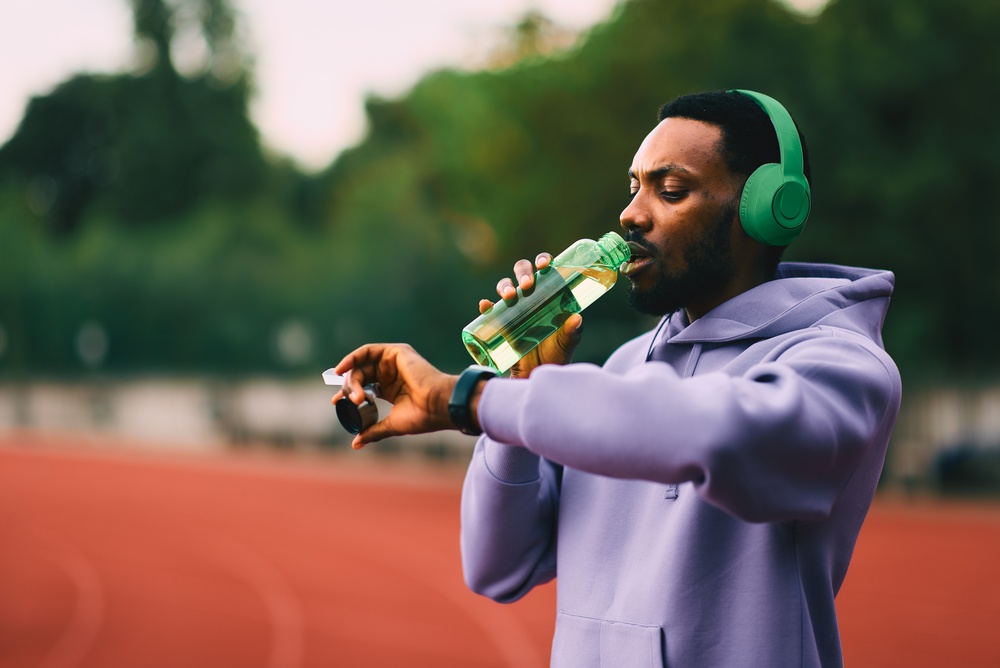
Smartwatches and fitness trackers have made this dramatically easier. Modern wearables now track sweat rate, heart rate variability, and real-time fluid reminders — putting the data directly on your wrist mid-run. The athlete checking his watch on the track is not just monitoring pace. He is managing his entire physiological state, one data point at a time.
Hydration and Mental Performance
The brain is roughly 75 percent water. When hydration levels drop, cognitive function takes a significant hit long before the body even signals thirst. Decision-making, mood regulation, and focus all degrade under mild dehydration — which means the mental edge needed to push through a hard workout disappears quietly and without warning.
Consistent habits do not just support the body. They actively protect the mind. Athletes who prioritize proper intake report better sleep quality, lower baseline stress levels, and sharper focus during both training and daily life consistently over time.
Building a Hydration Habit That Actually Sticks
The best hydration plan is the one that gets followed. Here is what works
- Carry a marked water bottle with hourly intake goals
- Set reminders on a smartwatch or phone during long sessions
- Add electrolytes for workouts exceeding 60 minutes
- Eat water-rich foods like cucumbers, watermelon, and oranges
- Log daily intake alongside workout data for pattern tracking
Small, consistent actions compound fast. Within two weeks of intentional hydration, most athletes report noticeable improvements in energy, endurance, and recovery speed.
The Smartwatch Generation Is Getting This Right
Wearable technology has quietly revolutionized how people approach personal health. Hydration tracking features, once reserved for elite sports teams, are now standard on mid-range fitness devices. The data is accessible, the reminders are automatic, and the results speak for themselves, giving users real-time insight into how their bodies respond to daily physical demands.
The runner on the track, water bottle in hand, watch on wrist — that image is not accidental. It is a blueprint for consistency and discipline. Proper hydration is not a passive habit. It is an active, trackable, and transformative choice that every serious mover should be making every single day.